So you have a vision for your own skincare brand. You know your target customer, you have a name in mind, and you’re ready to bring a product to life. Then you start researching manufacturers and hit a wall: Minimum Order Quantities, or MOQs.
For many aspiring brand founders, MOQs feel like the first major obstacle — a gatekeeping mechanism that seems to favor big, established players. But the reality in 2024 has changed dramatically. Today, it is entirely possible to launch a professional, retail-ready skincare line starting at just 100 units. You just need to understand how MOQs work and how to use them to your advantage.
This guide breaks it all down — plainly, practically, and with no fluff.
What Is a Minimum Order Quantity (MOQ)?
A Minimum Order Quantity is simply the smallest number of units a manufacturer is willing to produce in a single run. It exists because manufacturing has fixed costs — setting up equipment, sourcing raw materials in bulk, mixing formulations, filling containers, and printing labels all take time and resources regardless of whether you order 50 units or 50,000.
From the manufacturer’s perspective, MOQs protect their margins. From your perspective as a brand owner, they determine how much you need to invest upfront to get started.
MOQs vary widely. Some manufacturers require 1,000 or even 5,000 units per product. Others — especially those who specialise in private label for emerging brands — offer MOQs as low as 100 units. Knowing the difference is the key to launching smart.
Why MOQs Matter So Much When You’re Starting Out
When you are launching a new skincare brand, capital is limited and risk is real. Committing to 2,000 units of a moisturiser you’ve never sold before is a significant financial gamble. If the product doesn’t sell as expected, or if you want to tweak the formula after customer feedback, you’re stuck with a large inventory and little flexibility.
Low MOQs solve this problem by letting you:
- Test the market before making a large financial commitment
- Validate your product with real customers without overextending
- Iterate on formulas, packaging, or branding based on early feedback
- Launch multiple products simultaneously without massive upfront capital
- Keep cash flow healthy while you build your customer base
In short, a low MOQ gives you permission to start. And starting is everything.
Stock Formulations vs. Custom Formulations: MOQs Are Different
One of the most important things to understand is that MOQs are not one-size-fits-all. They depend heavily on which type of product you’re ordering.
Stock Formulations
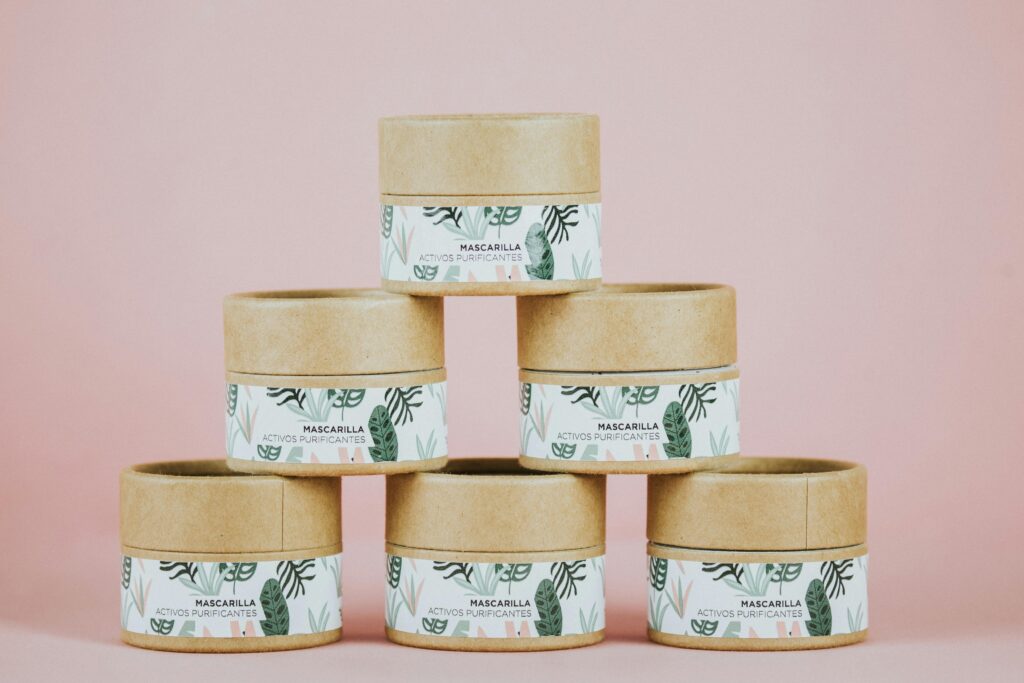
Stock formulations are pre-developed, tested, and ready-to-go formulas that the manufacturer already produces. You simply add your branding — your label, your logo, your name. Because the formula already exists, the setup costs are minimal, and manufacturers can offer very low MOQs.
At Private Label Skincare Plus, our stock formulations are available with MOQs starting at just 100 units with premium silk screen printing options. This is the ideal starting point for new brands or anyone launching a new product category without the risk of a large production run.
Custom Formulations
Custom formulations are developed exclusively for your brand — your specific ingredients, your textures, your scent profile. Because they require R&D, stability testing, and dedicated production runs, the MOQs are higher. Our custom formulation MOQ starts at 500 units, which is still remarkably low given the exclusive nature of the product you receive.
Think of it this way: stock formulations are your fast, affordable entry point. Custom formulations are where you go once your brand is established and you want total ownership of your formula.
What Can You Actually Launch with 100 Units?
More than you might think. With 100 units per product, you can launch a focused, cohesive skincare line that looks and feels completely professional. Here are a few realistic launch scenarios:
The Single Hero Product Launch
Order 100 units of one hero product — say, a Vitamin C serum or a hydrating face cream — and use it to test your brand concept. This is a low-risk way to learn what your audience responds to before expanding.
The Mini Collection Launch
Order 100 units each of three complementary products — a cleanser, a serum, and a moisturiser — and position them as a starter routine set. Your total investment is manageable, but you present as a complete, multi-product brand from day one.
The Gift Set Launch
With 100 units of two or three products, you can bundle them into gift sets — an incredibly popular format especially around gifting seasons. Bundles also increase your average order value without increasing your inventory risk.
How to Maximise a Small MOQ Order
Ordering 100 units doesn’t mean thinking small. Here’s how savvy brand founders make every unit count:
- Invest in great packaging: At 100 units, the cost difference between average and excellent packaging is minimal per unit, but the impact on customer perception is enormous.
- Photograph everything professionally: A small, well-photographed product line can outperform a large, poorly presented one in online sales. Use your 100 units for content creation before anything else.
- Sell direct-to-consumer first: Start with your own website or Instagram before approaching retailers. Direct sales give you better margins and direct customer feedback.
- Use pre-orders or soft launches: Take orders before you have stock in hand. This validates demand and generates cash flow before you even pay for your inventory.
- Treat your first 100 customers like gold: Early customers are your brand evangelists. Their reviews, referrals, and repeat purchases will fund your next, larger order.
Understanding Total Cost Beyond MOQ
MOQ is just one part of the financial picture. When planning your launch budget, factor in these additional costs:
| Cost Item | What to Know |
| Product cost (per unit) | Typically lower per unit as you scale up. At 100 units, expect a higher unit cost — factor this into your retail pricing. |
| Label & packaging design | A one-time cost that applies regardless of order size. Worth investing in properly from the start. |
| Silk screen / label printing | Included in many low-MOQ packages. Confirm with your manufacturer what’s included. |
| Shipping & fulfillment | Plan for inbound shipping (manufacturer to you) and outbound (you to customer). |
| Regulatory compliance | Depending on your market, you may need INCI labeling, safety assessments, or FDA registration. |
When to Scale Up Your MOQ
Starting at 100 units is smart, but it is a starting point — not a ceiling. Once you’ve validated your product and built a customer base, scaling up your order size brings real advantages:
- Lower cost per unit, improving your profit margins
- Priority production scheduling with your manufacturer
- Ability to supply wholesale accounts or retail partnerships
- More stock on hand to handle promotional campaigns or seasonal spikes
A good rule of thumb: once you’re consistently selling through a 100-unit order within 60 to 90 days, it’s time to consider moving to 250 or 500 units. By that point, you’ll have the sales data and customer confidence to invest more without the risk feeling overwhelming.
Choosing the Right Manufacturer for Low MOQ Orders
Not every manufacturer will work with low order quantities, and not every low-MOQ manufacturer delivers quality. Here’s what to look for:
- Transparency about what’s included at each MOQ tier (formulation, filling, labeling, packaging)
- Professional packaging and printing options — even at 100 units, your product should look retail-ready
- Responsiveness and willingness to educate first-time brand founders
- Experience with brands at your stage, not just large-scale corporate clients
- Clear lead times, quality standards, and a consultative approach to helping you choose the right formulas
At Private Label Skincare Plus, we’ve built our entire offering around helping new and growing brands launch confidently. With over 20 years of experience, low MOQs starting at 100 units, premium silk screen printing, and free professional consultations, we exist to remove the barriers that stop great brand ideas from becoming real products.
The Bottom Line
MOQs are not the barrier they once were. The private label skincare industry has evolved to meet entrepreneurs where they are — with quality products, professional branding, and order quantities that make sense for businesses at every stage of growth.
Starting with 100 units is not a compromise. It is a strategy. It lets you learn, adapt, and grow with real market feedback behind you — which is far more valuable than committing to a large order based on assumptions alone.
Ready to launch your skincare line with just 100 units? Contact Private Label Skincare Plus today for a free professional consultation. We’ll help you choose the right formulas, packaging, and branding to bring your vision to life — at a scale that makes sense for where you are right now.
Frequently Asked Questions
What does MOQ mean in skincare manufacturing?
MOQ stands for Minimum Order Quantity — the smallest number of units a manufacturer will produce in a single run. In private label skincare, MOQs typically range from 100 units for stock formulations to 500+ units for custom formulas.
Can I really start a skincare brand with 100 units?
Yes. With a private label manufacturer offering low MOQs, 100 units is a realistic and smart starting point. It allows you to test your product, gather customer feedback, and build your brand without overcommitting financially.
Is 100 units enough to sell online?
Absolutely. Many successful skincare brands launched their first product on Shopify, Etsy, or Instagram with fewer than 100 units. It’s more than enough to validate demand, create content, and build early customer relationships.
What’s the difference between private label and white label skincare?
White label products are generic, sold as-is to multiple brands with different labels. Private label products are branded specifically for you — with your name, logo, and identity — though the base formulation may be shared. Custom formulation takes this further by creating an exclusive formula entirely for your brand.
How do I know when to increase my MOQ?
A good indicator is sell-through speed. If you’re consistently selling 100 units within 60 to 90 days, it’s time to scale up. Larger orders reduce your cost per unit, improving margins and making your pricing more competitive.