
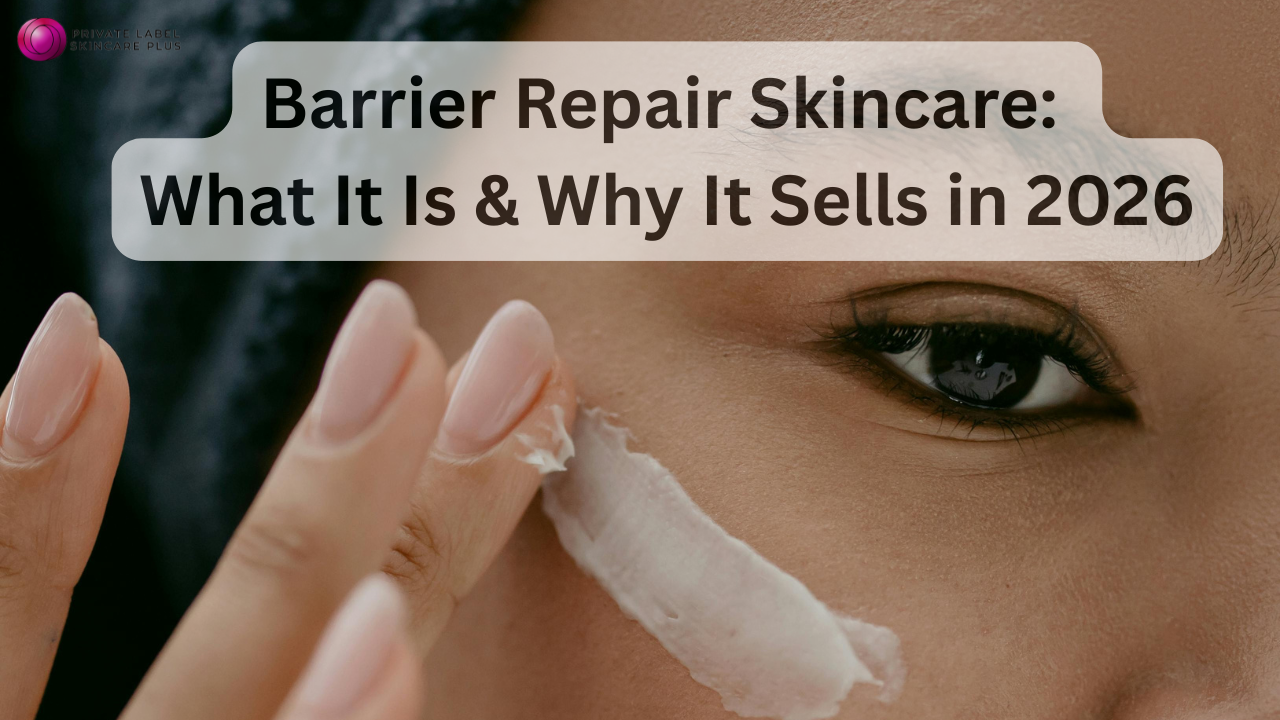
Barrier repair skincare refers to products formulated to strengthen the skin’s outermost protective layer, the stratum corneum. When this layer is healthy, it locks in moisture and keeps out irritants. When damaged, skin becomes dry, red, and reactive. Barrier repair products use ingredients like ceramides, niacinamide, and fatty acids to rebuild this layer and restore balance.
For years, barrier repair was a niche dermatology concern. Today, it is one of the fastest-growing categories in mainstream skincare, and one of the smartest additions you can make to a private label brand in 2026.
What Is the Skin Barrier and Why Does It Break Down?
The skin barrier is essentially a brick wall. Skin cells are the bricks, and a mix of lipids, ceramides, fatty acids, and cholesterol is the mortar. Together, they prevent moisture loss and block out pollutants, bacteria, and irritants.
When that mortar weakens, the barrier breaks down. Common causes include over-exfoliation, harsh cleansers, environmental stress, aging, and genetics. The result is skin that feels tight, stings when you apply products, breaks out more easily, and looks dull despite a full routine.
The tricky part? Many consumers do not realize their barrier is compromised. They keep layering products, looking for a fix, often making things worse. This is where a well-positioned barrier repair product becomes not just a solution, but an education opportunity for your brand.
Why Barrier Health Is Dominating Skincare in 2026
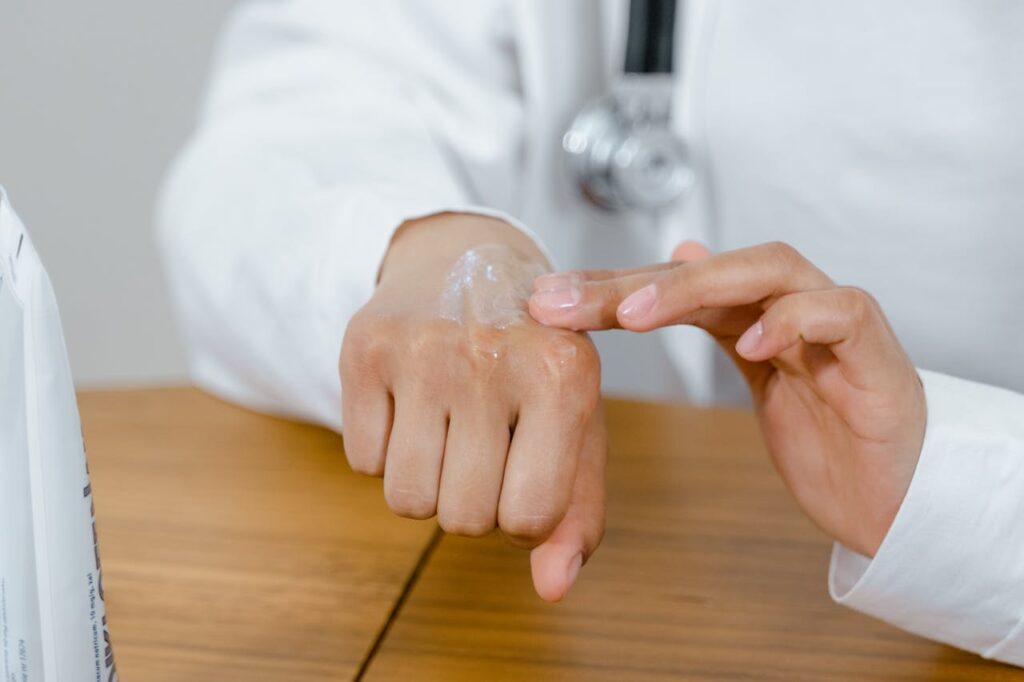
The conversation around barrier health has been building for several years, but 2026 marks a clear tipping point, and two shifts are driving it.
The first is the over-exfoliation backlash. The mid-2010s were defined by aggressive actives, strong retinoids, high-concentration AHAs, and multi-step acid routines. Social media amplified these trends fast. The result was a wave of consumers with damaged barriers, and a growing appetite for gentler, reparative skincare.
The second is the shift from reactive to proactive barrier care. Barrier products used to be for people already experiencing a problem. Now consumers are using them daily as a preventive foundation, the same way SPF moved from “beach essential” to “every morning without question.” Brands that position barrier repair as a daily essential rather than a corrective treatment tap into a far wider market.
Together, these shifts have made barrier repair one of the most searched, most discussed, and most commercially promising categories in skincare right now.
The Ingredients Your Customers Are Looking For
Skincare consumers in 2026 are ingredient-literate. They arrive on product pages already knowing what to look for. Make sure your barrier product features these:
- Ceramides, the gold standard barrier ingredient, clinically proven and widely recognized
- Niacinamide, strengthens barrier function, reduces redness, and controls oil
- Fatty acids (Omega 3, 6, 9), restore the lipid balance in the stratum corneum
- Panthenol (Vitamin B5), soothes compromised skin and supports healing
- Centella Asiatica, calms inflammation, popular in K-Beauty and wellness-oriented brands
- Hyaluronic Acid, draws moisture into the skin, supports comfort and plumpness
The most effective formulas combine several of these rather than relying on a single hero ingredient. A ceramide-plus-niacinamide combination, for example, addresses both structural repair and visible calming, a compelling dual benefit for your product positioning.
What Type of Barrier Product Should You Launch?
Barrier repair can be delivered across several formats. The right choice depends on your brand and your customer.
Barrier Repair Moisturizer is the most accessible starting point, a rich, lipid-replenishing cream that works for all ages and skin types. It is easy to position as a daily essential and has a broad commercial appeal.
Barrier Serum suits a more clinical or premium brand positioning. Lighter in texture, higher in price point, and appealing to the ingredient-savvy consumer who layers their skincare.
Overnight Barrier Mask is a high-margin, high-perceived-value format. Positioned as a weekly recovery ritual, it adds strong gifting potential to your lineup.
If you are launching a barrier product, start with a moisturizer. It is the most versatile, the most searched, and the easiest to communicate with a broad audience. Once established, a serum or mask makes a natural second addition.
At Private Label Skincare Plus, we offer barrier-focused stock formulations starting at just 100 units, so you can test the market without a large upfront commitment. Contact us for a free consultation to find the right formula for your brand.
How to Position Your Barrier Product to Drive Sales
Formulation is only half the work. How you talk about your product determines whether it sells.
Lead with the problem your customer recognizes, tight skin after cleansing, products that suddenly sting, redness that will not settle, before you introduce your product as the answer. Speak to the experience first, then the science.
Use clinical language, but keep it warm. Terms like ceramides, TEWL, and stratum corneum build credibility with an educated audience, but wrap them in human, reassuring copy, not a medical leaflet.
Finally, position your product as a daily essential, not a corrective treatment. The brands winning in barrier repair are not selling a fix for broken skin. They are selling protection, resilience, and the foundation of a healthy routine. That framing speaks to every skincare consumer, not just those already struggling.
Conclusion
Barrier repair is not a trend that will peak and fade. It reflects a fundamental, long-term shift in how consumers understand skin health, from covering problems to actively maintaining and protecting the skin’s natural systems.
For private label brand owners, the opportunity is clear: a well-formulated, well-positioned barrier product meets high and growing consumer demand, commands healthy retail price points, and sits naturally at the centre of any skincare routine.
The time to add one to your line is now, before the category becomes crowded.
Frequently Asked Questions
What is barrier repair skincare? Barrier repair skincare includes products formulated to restore the skin’s outermost protective layer using ingredients like ceramides, niacinamide, and fatty acids. They reduce moisture loss, calm inflammation, and protect against external irritants.
Is barrier repair skincare only for sensitive skin? No. While people with sensitive or reactive skin see the most dramatic results, barrier support benefits all skin types, especially those who use active ingredients regularly or live in harsh climates.
What are the best ingredients for barrier repair? Ceramides, niacinamide, fatty acids, panthenol, and centella asiatica are among the most clinically supported. The most effective products combine several of these ingredients rather than relying on one alone.
Can I add a barrier product to my private label skincare line? Yes, and it is one of the most commercially strong additions you can make right now. Private Label Skincare Plus offers barrier-focused stock formulations from just 100 units and custom formulations from 500 units. Get in touch for a free consultation.
How long does it take to see results from barrier repair products? Most people notice improved skin comfort within 2 to 4 weeks of consistent use. Full structural repair typically takes 4 to 8 weeks, alongside a simplified, gentle routine.